
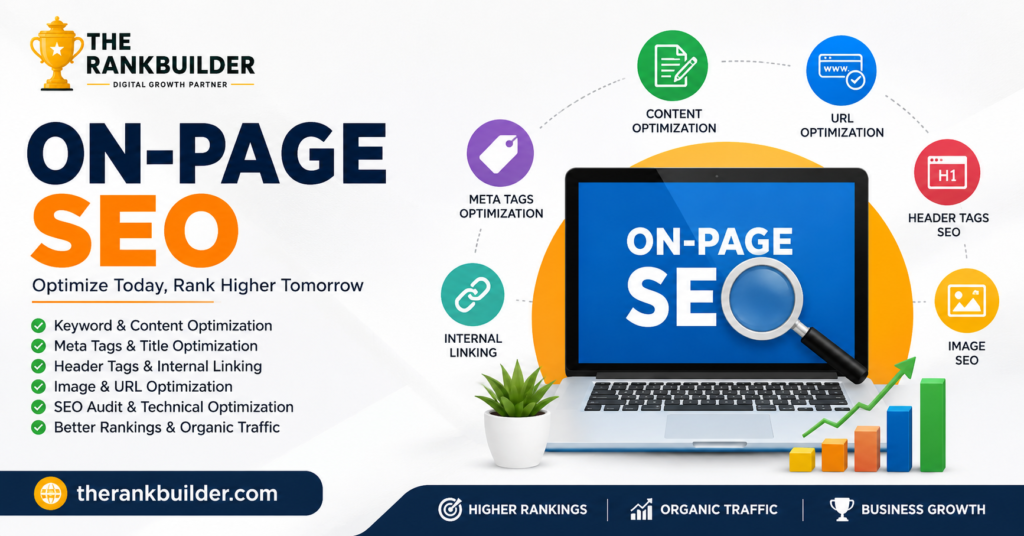
On-Page SEO is one of the most important parts of a successful search engine optimization strategy. It helps search engines understand your website, your content, and the keywords you want to rank for. A properly optimized page can improve visibility, increase organic traffic, and create a better experience for users.
While backlinks and other off-page factors are valuable, strong rankings often start with effective on-page work. From title tags and content to internal links, images, URLs, and user experience, every element can contribute to better search performance.
This complete guide explains the most important On-Page SEO practices you should follow to improve your website and increase your chances of achieving higher Google rankings.
What Is On-Page SEO?
On-Page SEO refers to optimizing individual pages of a website to help search engines understand their topic and relevance. It includes improving content, HTML elements, keywords, URLs, images, internal links, and other page-level factors.
The goal is not simply to add keywords everywhere. Modern SEO Optimization focuses on creating useful, relevant, well-structured content that satisfies search intent and provides a positive user experience.
Effective optimization helps search engines determine:
- What your page is about
- Which search queries may be relevant for
- How useful the content is for users
- How the page connects with other pages on your website
A professional On-Page SEO Service can help businesses identify weaknesses and improve important ranking elements.
Why Is On-Page SEO Important?
Search engines use many signals to understand and evaluate web pages. If your website is poorly structured or lacks clear topic relevance, search engines may struggle to understand your content.
Strong On-Page Optimization can help improve:
- Search engine visibility
- Organic Traffic
- Google Ranking potential
- User experience
- Website relevance
- Content quality
- Click-through rates
- Website Performance Optimization
Unlike many off-page strategies, you have direct control over most on-page elements. This makes optimization an essential part of any long-term search engine optimization strategy.
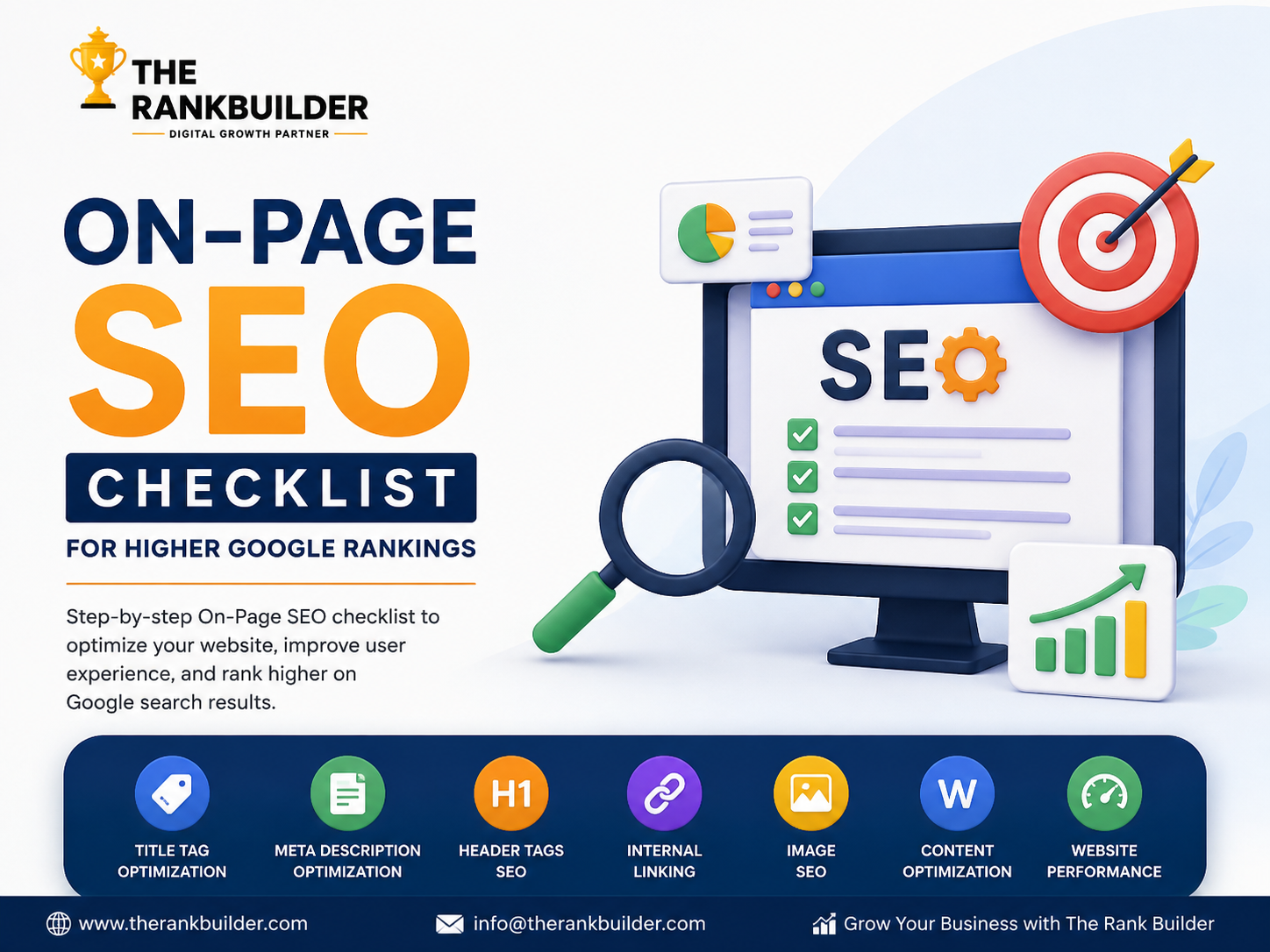
On-Page SEO Checklist
1. Start With Proper Keyword Research
Every successful page should begin with keyword research. Before writing or optimizing content, identify the primary keyword and relevant secondary terms.
Your main keyword should represent the central topic of the page. Secondary keywords should support the topic and cover related search queries.
For effective Keyword Optimization, focus on:
- Primary search terms
- Related keywords
- Search intent
- Long-tail phrases
- Questions users ask
- Topic relevance
Avoid forcing keywords into sentences. Natural language is more important than repeating the same phrase unnecessarily.
2. Optimize the Title Tag
Title Tag Optimization is an important part of improving search visibility. Your title tag helps search engines and users understand the main topic of the page.
A strong title should:
- Include the primary keyword naturally
- Clearly describe the page
- Match search intent
- Encourage users to click
- Avoid unnecessary keyword repetition
For example:
On-Page SEO Checklist for Higher Google Rankings
This title clearly communicates the page topic while naturally including the target keyword.
A compelling title may also improve click-through rates from search results.
3. Write an Effective Meta Description
Meta Description Optimization helps create a clear summary of your page in search results. Although meta descriptions are not a direct ranking guarantee, a well-written description can encourage more users to visit your website.
A good meta description should:
- Summarize the page clearly
- Include relevant keywords naturally
- Explain the benefit to users
- Match the page content
- Encourage clicks
Avoid writing generic descriptions for every page. Each important page should have a unique and relevant summary.
4. Use Header Tags Correctly
Header Tags SEO helps organize your content and makes it easier for both users and search engines to understand the structure of a page.
Use headings logically:
- H1 for the main page topic
- H2 for major sections
- H3 for supporting points
- H4 when additional structure is needed
Your page should normally have one clear H1 that represents the main topic. Supporting headings should divide long content into easy-to-read sections.
Proper heading structure also improves readability, especially for long-form content.
5. Create High-Quality Content
Content is one of the most important parts of On-Page SEO. Search engines aim to provide users with useful and relevant information.
Your content should answer the user’s search intent and provide real value.
Strong Content Optimization includes:
- Clear explanations
- Relevant examples
- Helpful information
- Logical formatting
- Accurate details
- Natural keyword usage
- Easy-to-read paragraphs
Avoid creating content only for search engines. Write for people first, then optimize the content so search engines can understand it properly.
6. Optimize Your URLs
URL Optimization helps create clean and understandable page addresses.
A good URL should be:
- Short
- Descriptive
- Relevant to the topic
- Easy to read
- Free from unnecessary parameters
For example:
yourwebsite.com/on-page-seo-checklist
This is usually easier to understand than a long URL containing random numbers or unnecessary words.
Use words that clearly describe the page topic and maintain a consistent URL structure across your website.
7. Improve Internal Linking
Internal Linking connects related pages within your website. It helps users discover more content and allows search engines to understand the relationship between your pages.
Effective internal links can:
- Improve website navigation
- Distribute link value across pages
- Help search engines discover content
- Keep visitors engaged longer
- Support important pages
Use descriptive anchor text whenever possible. Instead of writing “click here,” use text that describes the destination page.
For example, you could link naturally to a relevant service page such as an On-Page SEO Service or another helpful SEO resource.
8. Optimize Images for SEO
Image SEO is another important part of page optimization. Large or poorly optimized images can negatively affect page speed and user experience.
To improve image performance:
- Use descriptive file names
- Add relevant alt text
- Compress large images
- Use appropriate image formats
- Avoid uploading unnecessarily large files
Alt text should describe the image accurately. Do not add keywords repeatedly when they are not relevant to the image.
Proper image optimization can support accessibility and improve overall Website Performance Optimization.
9. Improve Page Speed
Page speed can significantly influence user experience. Visitors may leave a website if pages take too long to load.
Common ways to improve speed include:
- Compressing images
- Using efficient code
- Reducing unnecessary scripts
- Enabling browser caching
- Choosing reliable hosting
- Minimizing heavy plugins
A faster website can create a smoother experience for users and support better overall SEO Optimization.
10. Focus on Mobile Optimization
A large percentage of web searches happen on mobile devices. Your website should provide a smooth experience across phones, tablets, and desktop devices.
Check whether your pages:
- Display correctly on mobile
- Use readable text
- Have accessible buttons
- Load quickly
- Avoid intrusive elements
Mobile usability should be part of every Website SEO Audit.
11. Add Relevant External and Internal Context
Your content should demonstrate strong topical relevance. Supporting your main topic with related concepts can help create more comprehensive content.
For example, a page about On-Page SEO Techniques may also naturally discuss:
- Meta tags
- Content quality
- Internal links
- Image optimization
- Technical SEO
- User experience
This approach helps create complete content without repeating the exact focus keyword too often.
12. Perform Regular SEO Audits
A regular Website SEO Audit can identify problems that may limit your website’s performance.
Review important issues such as:
- Missing title tags
- Duplicate content
- Broken links
- Slow pages
- Missing meta descriptions
- Poor heading structure
- Image optimization problems
- Weak internal links
Regular audits help you identify opportunities for continuous improvement.
Common On-Page SEO Mistakes to Avoid
Many website owners make optimization mistakes that can reduce content quality.
Common problems include:
Keyword Stuffing
Repeating the same keyword too frequently can make content difficult to read. Use natural language and related terms instead.
Duplicate Content
Publishing highly similar content across multiple pages can create confusion about which page should rank for a specific topic.
Poor Content Structure
Long blocks of text without headings can make content difficult to read. Use clear sections and short paragraphs.
Ignoring Search Intent
Even technically optimized content may struggle if it does not answer what users are actually searching for.
Weak Internal Links
Important pages should be connected with relevant internal links so users and search engines can discover them easily.
The Role of Technical SEO
Although Technical SEO is different from page-level optimization, both areas work together.
Technical factors such as crawlability, indexing, website security, page speed, and structured website architecture can support stronger search performance.
Combining technical improvements with quality content and effective On-Page SEO creates a stronger foundation for long-term search engine success.
Conclusion
A strong On-Page SEO strategy is essential for improving website visibility, user experience, and long-term search performance. Optimizing title tags, meta descriptions, headings, URLs, content, images, and internal links can help search engines better understand your pages.
The most effective approach is to focus on users while maintaining proper SEO structure. Avoid keyword stuffing and unnecessary optimization tactics. Instead, create helpful content that answers search intent and provides a smooth website experience.
By following this On-Page SEO checklist, you can improve your website’s overall optimization and create better opportunities for higher rankings and increased organic traffic.
For professional website optimization and expert guidance, visit The Rank Builder for reliable SEO services designed to support sustainable search growth.
Medium is a leading publishing platform for sharing blogs, articles, and insights. Connect with readers worldwide and grow your online presence